
Computing
Computing in the Early Years (EYFS)
Computing (previously referred to as ‘Technology’) is no longer a separate Early Learning Goal. Instead, computing-related knowledge and skills are embedded across all areas of learning within the EYFS.
Nursery
Children begin to develop early computing foundations through:
- Learning and remembering simple rules (PSED)
- Matching physical skills to tasks and activities (Physical Development)
- Exploring how things work (Understanding the World)
Reception
Children continue strengthening these foundations by:
- Building resilience and perseverance when faced with challenge (PSED)
- Understanding factors that support health and wellbeing, including sensible screen time (PSED)
- Developing fine motor control for safe and confident tool use (Physical Development)
- Exploring and refining creative effects using a variety of media (Expressive Arts & Design)
Links to Early Learning Goals
Relevant ELG elements include:
- Willingness to try new activities
- Independence, resilience, and perseverance
- Understanding and following rules, and recognising right from wrong
These early experiences prepare pupils for the Computing curriculum in Key Stage 1.
Computing in KS1 and KS2
Our Computing curriculum is built around six key areas:
- Computer Science: Coding and computational thinking
- IT: Media
- IT: Creativity
- IT: Data
- Computer Networks
- Digital Literacy (embedded throughout all units)
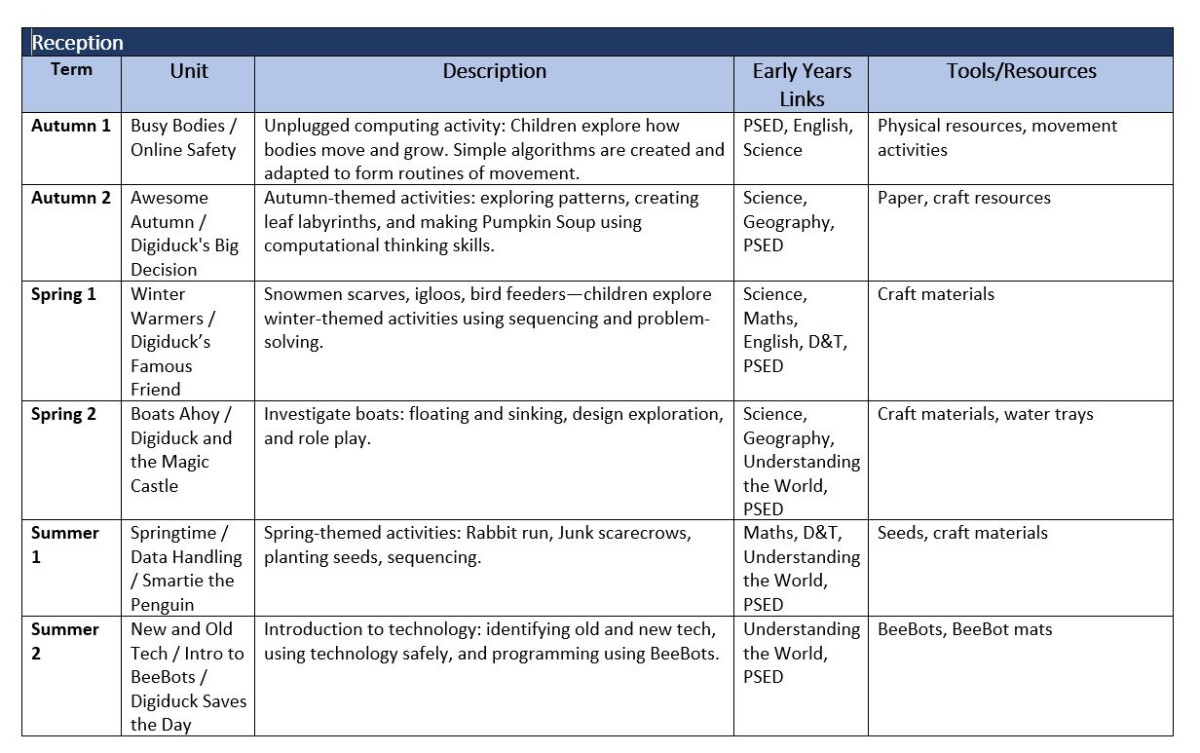
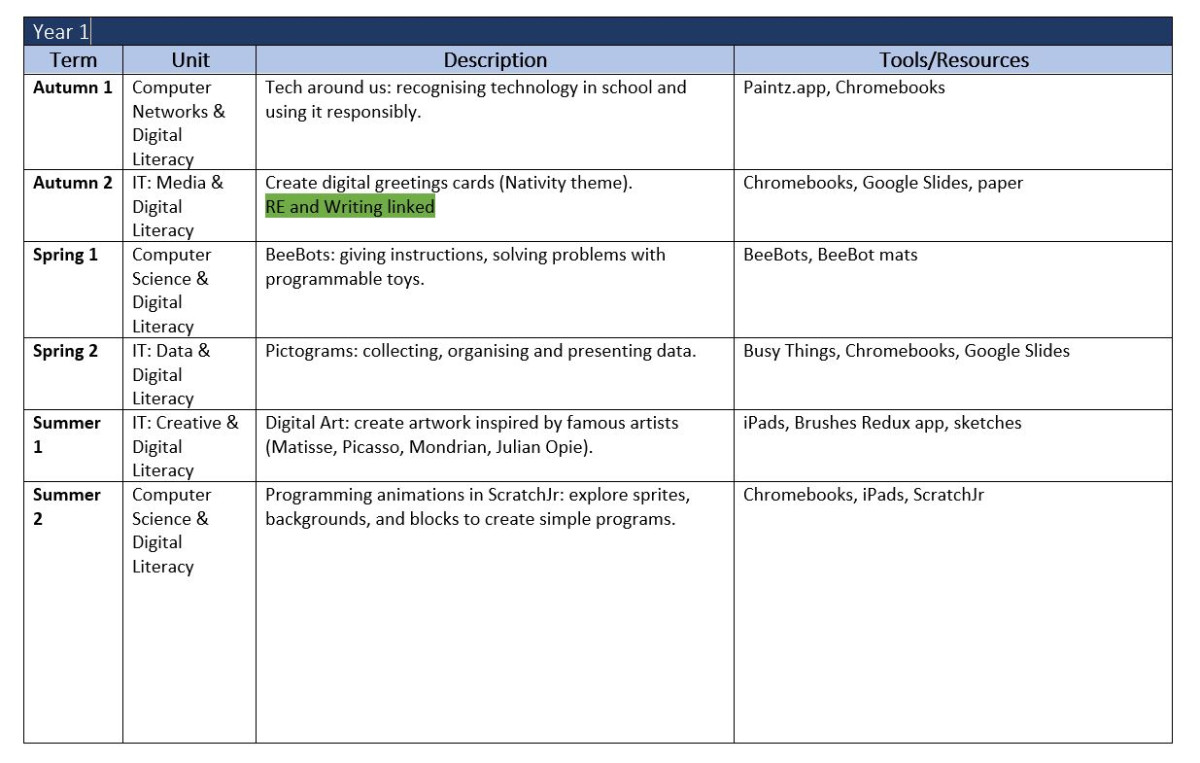
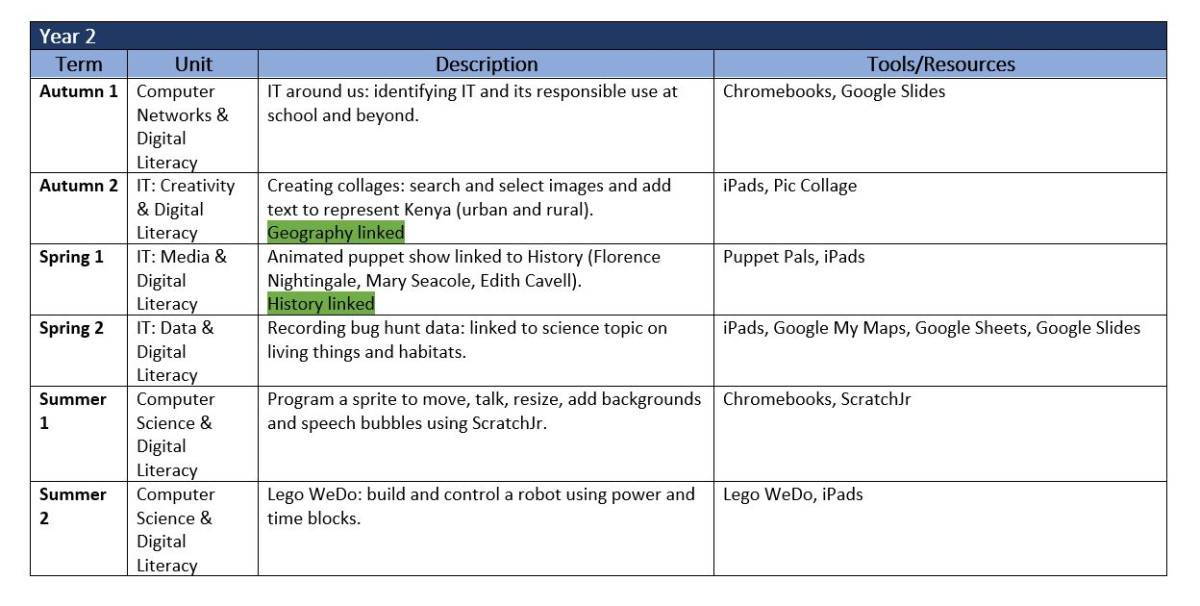
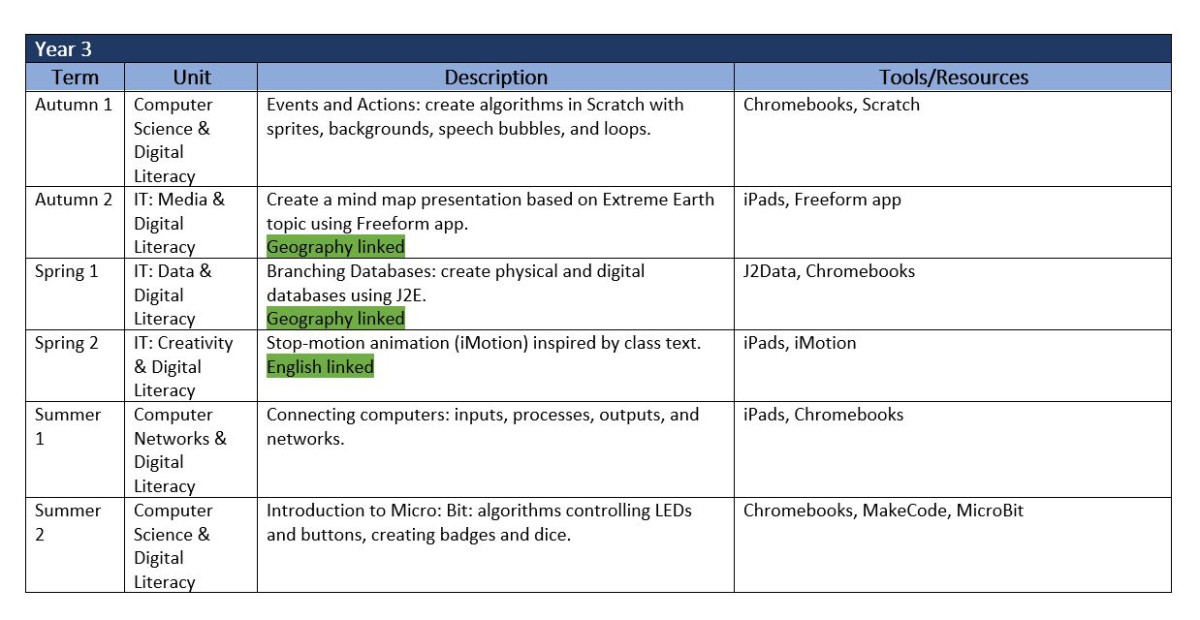
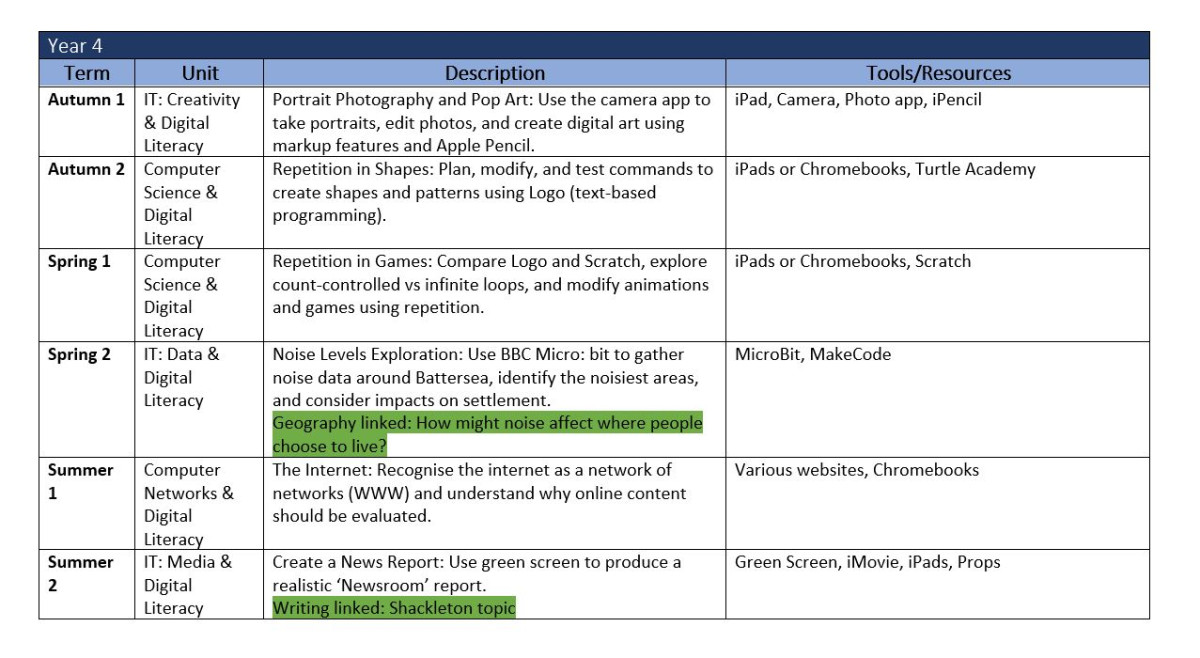
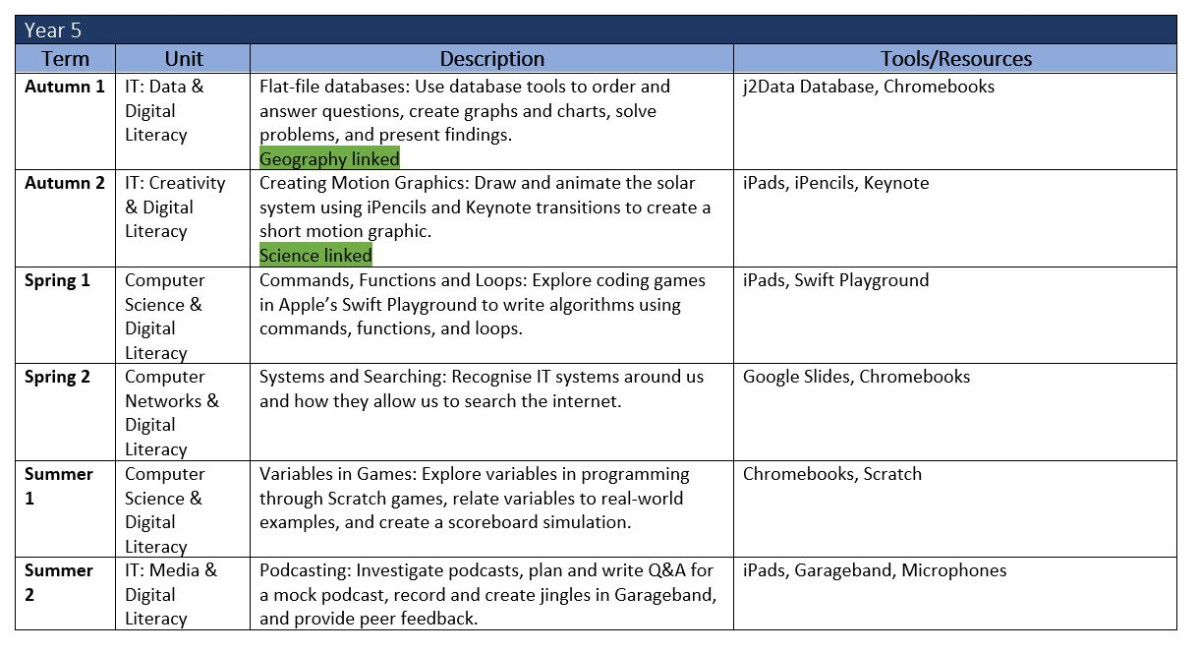
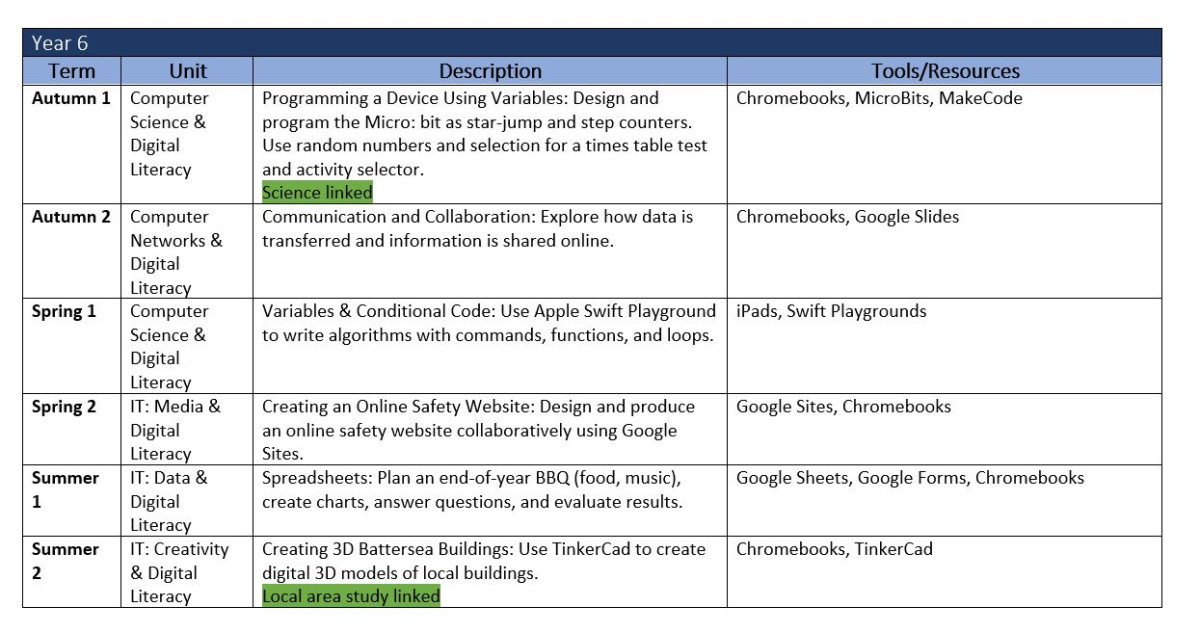
Computing Curriculum Road Map: Reception – Year 6
Online Safety
Skills Progression (EYFS–Year 6)
- Early Years: basic algorithms, sequencing, exploring technology safely
- KS1: coding with BeeBots, simple programs, digital creation, data handling
- Lower KS2: Scratch/ScratchJr, Micro:Bit, digital art, data collection and analysis
- Upper KS2: advanced coding (Swift Playground), variables, loops, conditional code, collaborative digital projects, 3D modelling
E-Safety and Digital Literacy
E-safety is a core element of our Computing curriculum and is taught explicitly in all year groups. Our approach ensures full coverage of the Education for a Connected World (2020) framework, with any objectives not addressed in Computing reinforced through PSHE. Our aim is to equip pupils with the knowledge, skills and behaviours they need to navigate the online world safely, responsibly and confidently, preparing them for life in a rapidly changing 21st-century digital world.
We follow the six Digital Literacy strands recommended by the National Centre for Computing Education (NCCE):
- Use of devices and applications
- Handling and storing data and information
- Designing, creating and editing digital content
- Communicating using technology
- Online safety
- Moral and ethical behaviour relating to technology
Online Safety – Supporting Parents and Carers
In today’s digital world, helping children stay safe online is an essential part of their learning and development. At St Mary’s, we aim to equip pupils with the knowledge and skills they need to navigate the online world safely, responsibly, and confidently.
There are many trusted resources available for parents and carers to support children at home. Below is a comprehensive list:
Key Online Safety Resources
National Guidance and Advice
- Thinkuknow – Advice from the National Crime Agency to help children stay safe online.
https://www.thinkuknow.co.uk/parents/ - Internet Matters – Support for parents and carers on keeping children safe online, including guides for social media, gaming, and devices.
https://www.internetmatters.org/ - Parent Info – Expert information for parents and carers on online safety.
https://parentinfo.org/ - LGfL (London Grid for Learning) – Online safety guidance, resources, and activities for families.
https://www.lgfl.net/ - Net Aware (NSPCC) – Reviews and safety information for apps, games, and social networks.
https://www.net-aware.org.uk/ - Safer Schools App – Resources and guidance to help families manage online safety.
https://www.zurich.co.uk/en/campaigns/safer-schools - NSPCC Learning – E-safety for Schools – Guidance and teaching resources for online safety.
https://learning.nspcc.org.uk/research-resources/schools/e-safety-for-schools/ - https://www.nspcc.org.uk/keeping-children-safe/online-safety/talking-to-children-about-ai/
- UK Safer Internet Centre – Teaching Resources – Guidance for parents and teachers to support children online.
https://www.saferinternet.org.uk/advice-centre/teachers-and-school-staff/teaching-resources
Additional Trusted Resources
- Childnet – Parents and Carers – Practical advice for keeping children safe online, including social media and gaming tips.
https://www.childnet.com/resources/parents-and-carers - Common Sense Media – Reviews of apps, games, and websites with age-appropriate safety guidance.
https://www.commonsensemedia.org/ - Parent Zone – Guides, webinars, and advice for families on digital wellbeing and technology use.
https://parentzone.org.uk/ - Google Safety Centre – Families – Tips on online safety, digital wellbeing, and using Google tools safely.
https://safety.google/families/ - BBC Own It – Support for children and parents to manage online life safely, including wellbeing resources.
https://www.bbc.com/ownit
Ofcom: Children and Parents – Media Use